

Who pays for someone else's waste
One person can raise the bill for a whole building. Where collective liability for waste comes from, and what access control actually changes.
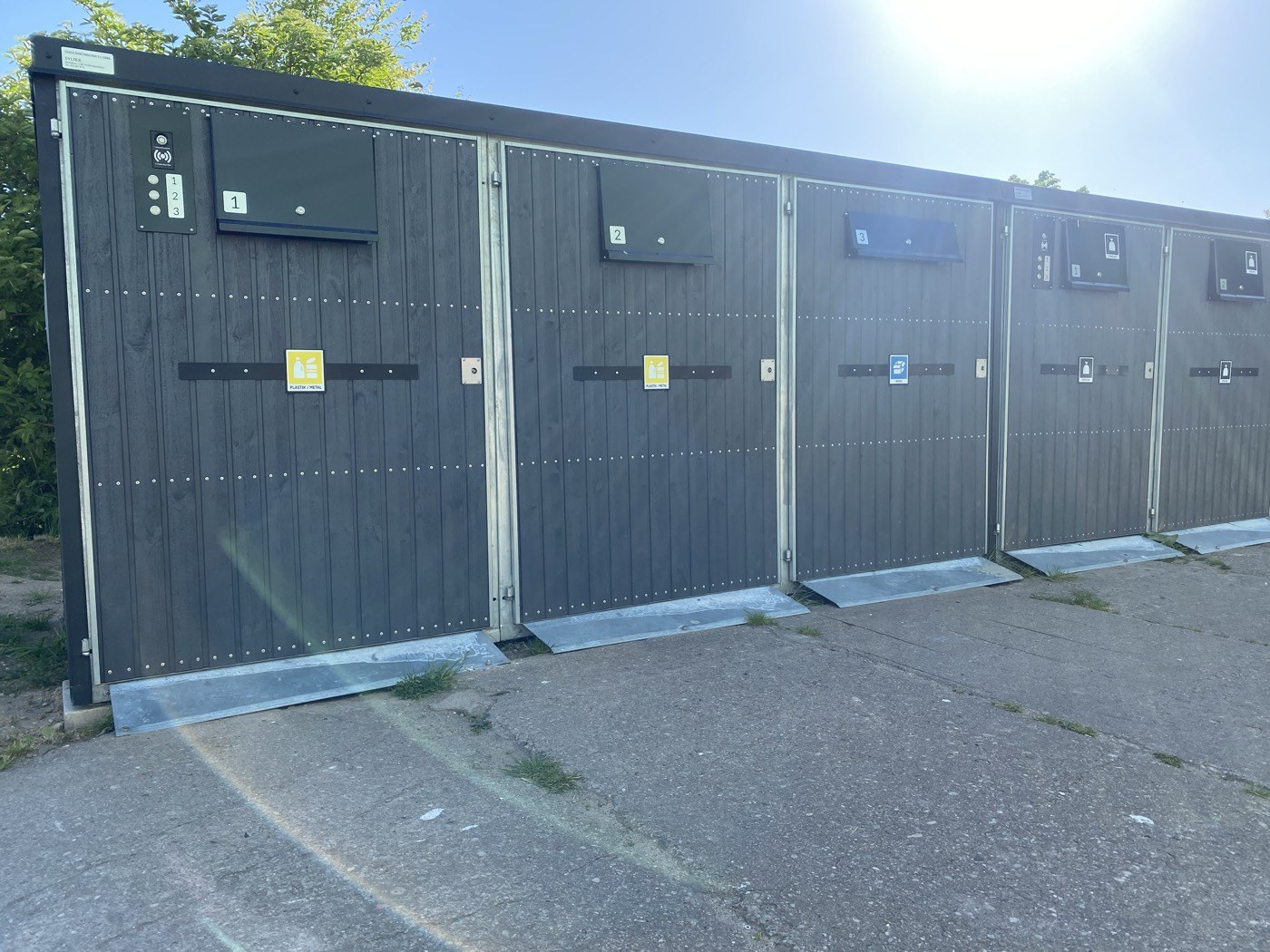
The residents of the building sort their waste. Everyone except one person. From that point on, the process unfolds without any way to identify who caused the problem:
- The collection company looks inside the bin. It finds something in the paper stream that should not be there and reports the irregularity to the municipality.
- The municipality may issue a decision raising the charge. In Poland, the increased fee may amount to between two and four times the standard rate and applies to the entire property, not to a single dwelling.
- In an apartment block the decision goes to the housing association or housing cooperative as a single legal entity.
- The bill goes up for everyone. Including the residents who have sorted correctly for years.
And this is where the problem appears:
The system charges for the outcome, but does not always let you point to the cause.
Why this matters to the municipality
Because the municipality has a problem of its own.
Targets for recycling and preparing for re-use keep rising. Under the EU framework they reach 65% by 2035, and every member state sets the interim path. In Poland the required level was 55% for 2025 and 56% for 2026, and a municipality that misses it can face an administrative fine.
This is not a theoretical risk.
612 of them have already paid. So the municipality has a very concrete reason to care about sorting quality.
Source: Polish Ministry of Climate and Environment, answer to a parliamentary question, March 2025. The total covers 2020–2023.
The trouble starts when an irregularity in one bin has to be attributed to an entire property, even though nobody knows who actually caused it.
An anonymous bin is the problem
A bin standing on the street does not know who uses it. Nobody knows:
- who put the waste in,
- when they did it,
- whether the waste came from a resident of that property at all,
- whether someone from outside used the bin.
This matters most where bins sit next to a road, a car park, a shop or anywhere easy for passers-by to reach.
When a problem appears, the property manager is left with one very simple piece of information: the wrong waste was found in the bin. Without knowing who used it, it is hard to get from the problem to a specific person.
You can of course put a notice up in the stairwell:
"Please sort your waste correctly."
Except a notice will not tell you who failed to read it.
What access control changes
Let us start with what it does not change:
- it will not guarantee correct sorting — a resident with a valid credential can also put waste in the wrong bin,
- it is not automatic protection against the raised charge,
- it will not assess the contents of a bag — no device looks inside.
What it does solve is one specific problem: the anonymity of using the bin.
The difference is easiest to see side by side:
| Anonymous bin | Bin with access control | |
|---|---|---|
| Who used the bin? | Unknown | Recorded identifier of an authorised user |
| When did it happen? | Unknown | Date and time of every opening |
| Did an outsider use it? | Impossible to establish | Only a credential holder can open it |
| What does the manager have in a dispute? | A notice in the stairwell | A record of who used the bin at that time |
Access control data is not proof of what was in a particular bag — and it should not be presented that way. It is, however, information that simply did not exist before: it lets you check whether authorised users or an outsider used the bin in a given period, and who to talk to if needed.
That is the fundamental difference between an anonymous bin and one whose use can be tied to a specific user.
Not only penalties
There is one more possibility here.
If the system shows how the bins are used, that data can serve more than finding someone to blame. It can also be used to reward good behaviour.
Today it is easy to say:
"Someone sorted badly, so everyone pays more."
It is much harder to say:
"Those who use the system correctly should be rewarded in some way."
Not because technology sets a lower rate on its own — that is a decision for the municipality and the system operator. But to even discuss such a model, you need data. And without access control, an anonymous bin simply does not generate this kind of data.
What this means for a property manager
If you manage a property, three questions are worth asking:
- Can people from outside the property use the bins? If so, part of the risk may have nothing to do with the residents.
- If a problem arises, can you check who used the bin? If not, appealing to all residents is largely what you are left with.
- Do residents who sort correctly have any way of demonstrating it? Without data it is hard to tell good behaviour from bad.
Access control does not solve the whole of waste management. What it does solve is one specific problem: it limits anonymous use of the bins and ties that use to authorised users.
That is how it works at Przelewice Arboretum: several authorised organisations share one collection point, and every opening is tied to a specific user.
And that changes how responsibility for waste can be managed.
On how we secure the data from those openings, and what we do not promise, see Where the limits of our access control lie. For how the device itself works, see SAC access control.