

Underground containers — the invisible problem below ground
Underground containers solve the problem of space. Managing something you cannot see is more difficult. This is where electronics can make a difference.
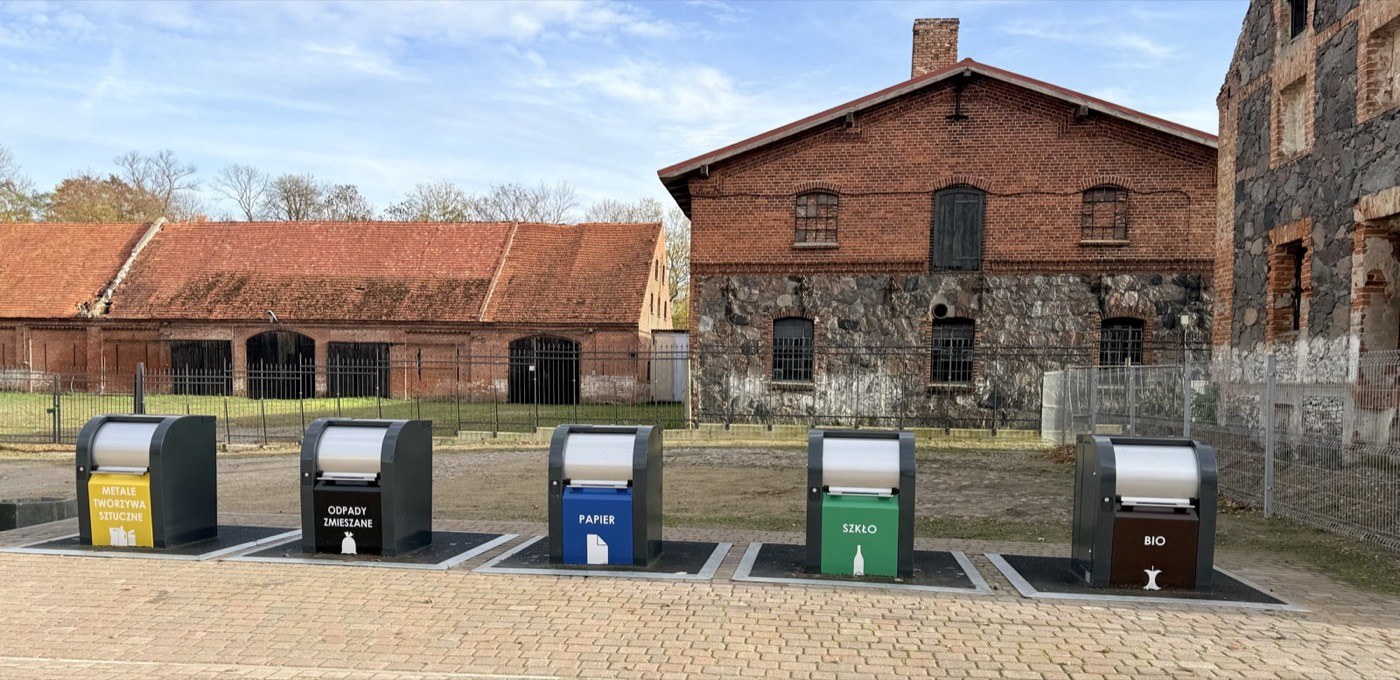
At ground level, there is not much to see: a lid, a deposit opening, perhaps a few containers. The rest is below ground.
That is the biggest advantage of underground containers — but from the operator's perspective, it can also create a problem. When waste disappears below ground, so does much of the information about how much waste is inside, who is using the container and when it actually needs to be emptied.
As long as everything goes according to plan, there is no problem. The challenge starts when a decision has to be made:
- Should the container be collected now?
- Can it wait a little longer?
- Who is actually using this collection point?
- Why should two organisations using the same containers bear the same cost when one uses them several times more often?
The container itself cannot answer any of these questions. Electronics can provide the data.
First, the collection problem
Imagine a collection point with several underground containers. The operator needs to plan collections and has two options.
The first is to follow a fixed schedule — weekly, fortnightly or monthly. It is simple, but has an obvious limitation: the schedule does not know how much waste is actually inside the container. One container may be almost full, another half full and a third almost empty. The collection vehicle still arrives according to the calendar.
The alternative is to check the containers on site. But that raises another question: why drive there just to check something that can be measured automatically?
A fill-level sensor allows the operator to monitor the container remotely. The operator opens the platform and sees its current status. If the fill level approaches the defined threshold, a collection can be planned. If the container is still far from full, there is no need to arrange a collection simply because a certain number of days has passed.
This is not about replacing the collection schedule. It is about making the schedule more responsive to actual conditions.
It is not about collecting more often. It is about collecting when collection is actually needed.
The second problem is the more interesting one
Suppose two or three organisations use the same collection point, with access to the same containers.
Organisation A uses the point very frequently. Organisation B uses it only occasionally. If the costs are divided equally, both organisations pay the same amount — regardless of how often they use the infrastructure.
That may be convenient. It is not always fair.
Another approach is possible: the more you use the infrastructure, the greater your share of the costs. But to apply such a model, you first need to know how often each user actually uses it.
This is where access control comes in. Each opening can be associated with a specific authorised user. The system therefore records not only that the container was opened, but also who opened it and when.
After a month, there is a usage history. After several months, patterns begin to emerge. Only then is it possible to consider a cost-sharing model based on actual use of the infrastructure.
This does not mean that the system determines the charges itself. It provides data that simply was not available before.
What if someone uses the container who should not?
An underground container may be located next to a road, a car park, a shop or another publicly accessible area. Without access control, the operator has little control over who uses it — the container is effectively available to anyone.
When a problem occurs, it can therefore be difficult to answer a basic question: did the waste actually come from the users assigned to this collection point?
Access control changes this. Only users with the appropriate authorisation can use the container, and their use is recorded.
This does not mean that the system knows what waste a particular person put into the container — and that should not be promised. What it provides is something different: control over who is allowed to use the container, together with a history of that use.
That can be enough to turn an anonymous collection point into infrastructure that can be actively managed.
Why fill-level sensing and access control work well together
Because they answer two different questions.
| Fill-level sensor | Access control | |
|---|---|---|
| What question does it answer? | What is happening inside the container? | Who is using the container? |
| What does the operator see? | Fill level and how quickly it is increasing | Who opened the container and when |
| What is it used for? | Planning collections based on actual fill level | Managing access and allocating costs according to agreed rules |
Together, these data provide a much more complete picture. The operator can see that a container is 80% full and, at the same time, check who has used it over the previous weeks. They can monitor how quickly a particular container is filling and compare usage between collection points.
In other words, decisions can be based on actual data rather than experience and the calendar alone.
This is how the system in Przelewice came about
This was not a project that started with the idea of "building a smart container". The problem was much more practical.
Several organisations use the containers at the same collection point. The containers are underground, so their fill level cannot be assessed from the outside. The point is also located in a publicly accessible area.
The operator therefore needed answers to two questions: when do the containers need to be emptied, and who uses them — and how often?
We combined fill-level measurement with access control. The sensor makes it possible to monitor the container without travelling to the site. Access control records use of the collection point. The platform brings both types of information together in one place.
And that is the key difference: you do not simply get two independent devices. You get data that can be used to manage the collection point as a whole.
What the operator sees in practice
| Instead of assumptions | Concrete data |
|---|---|
| "Collection is on Wednesday." | Container no. 2: 82% full |
| "We will probably need to empty it soon." | Collection threshold expected to be reached soon |
| "That company probably uses it more often." | Organisation A: 24 openings. Organisation B: 7 |
The figures above are illustrative. The exact operating and cost-allocation rules depend on the system configuration and the model adopted by the operator. The fundamental difference, however, is simple: assumptions are replaced with data.
What does the operator gain?
The value is not primarily in the electronics themselves, but in several practical benefits:
- Fewer unnecessary inspections. There is no need to physically inspect every container simply to determine its fill level.
- Better collection planning. Collections can be planned according to actual fill level rather than the calendar alone.
- The ability to differentiate costs. Where several organisations share a collection point, the opening history can provide a basis for allocating costs according to agreed rules.
- Restricted access for unauthorised users. The container can be made available only to users with the appropriate authorisation.
- Usage history. The operator can see not only the current situation, but also how the collection point has been used over time.
What about the underground installation itself?
This is the part that is not visible on the screen. Electronics installed in an underground container have to cope with conditions that do not normally exist in a conventional above-ground bin.
- Connectivity is more challenging. Concrete, surrounding soil and metal structural elements can attenuate the signal.
- Sensor position and angle matter. The sensor measures the distance to the waste surface, so the geometry of the chamber affects measurement quality.
- Battery operation is particularly important. Running cables to the underground part of an existing installation can be costly and difficult.
- Servicing must be possible without dismantling the installation. Access to the device should not require the entire container to be lifted out or specialist equipment to be brought in.
For this reason, retrofitting electronics to an underground container is not simply a matter of attaching a sensor. The complete installation and operating concept have to be designed around the specific site.
You do not have to rebuild everything
This is particularly important for existing collection points. Underground containers are a long-term investment. If the existing infrastructure is already working, there is no reason to replace it simply because the operator wants additional information.
Electronics can be added as another layer on top of the existing system. The container stays. The lid stays. The existing infrastructure stays.
What is added is the ability to measure, identify authorised users and monitor the installation remotely.
From a container to a system
An underground container is, in itself, a solution to a space problem. Electronics solve a different problem: the lack of information.
Without them, the operator knows where the container is and when the schedule says it should be emptied. With them, the operator can know much more: how full it is, when collection is likely to be needed, who uses the collection point, how often it is used and how usage changes over time.
That is why we do not see electronics simply as an accessory to an underground container. We see them as a way of turning infrastructure that has been sitting below ground for years into a source of information that can be used to manage it more effectively.
The problem is not that you cannot see the container. The problem is that you cannot see what is happening to it.
What follows from this for fitting below ground is on the underground waste container access control page. How fill-level measurement itself works: Fill-level sensor. On access control and recording bin use, see Who pays for someone else's waste.